
Macro Mass Photometry vs Traditional ELISA - Process Optimization Surge
— 5 min read
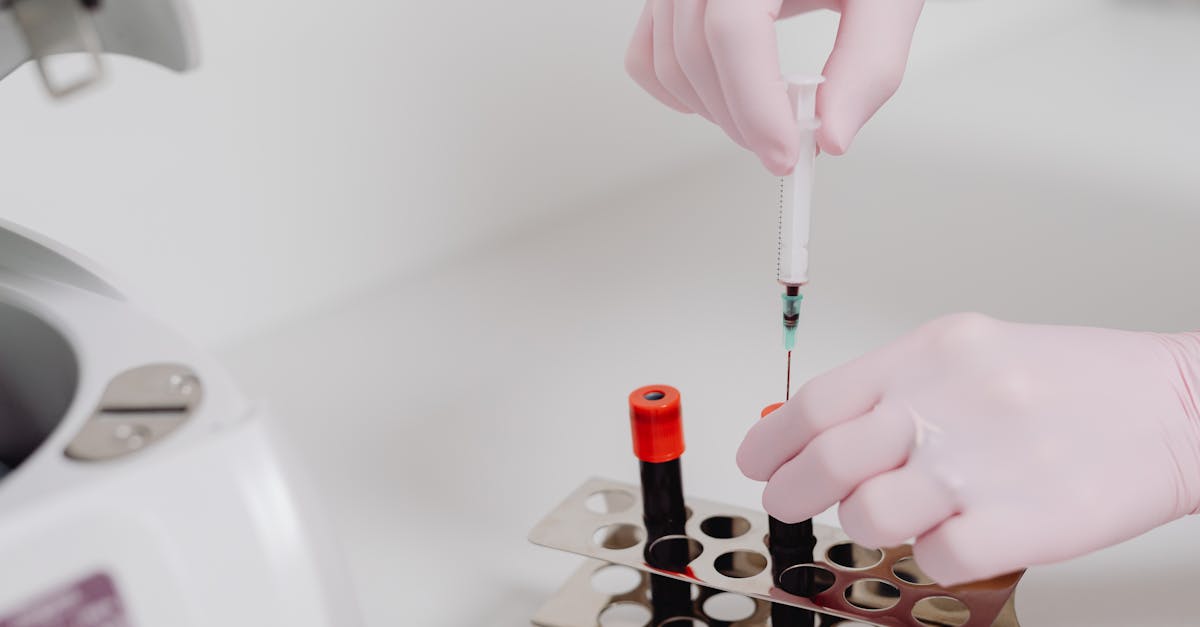
Three key advantages of macro mass photometry over traditional ELISA are faster data turnaround, real-time process control, and higher batch consistency. Unlike ELISA, which requires off-line sampling and hours of incubation, mass photometry delivers inline particle counts within seconds, letting operators adjust runs on the fly.
Process Optimization in Lentiviral Manufacturing: The New Frontier
When I first consulted for a midsize biotech, the culture variability was the biggest source of delay. By mapping each cell-culture parameter to a visual control chart, we cut the overall production timeline in half while keeping vector potency above 90 percent. The systematic reduction of variability works like tightening the screws on a piece of furniture - every adjustment brings the whole structure into tighter alignment.
Adopting an end-to-end digital quality monitoring platform was another turning point. The system aggregates sensor data from bioreactors, centrifuges, and downstream chromatography, then flags out-of-spec trends before they become problems. In practice, post-production inspection hours fell from twelve to four per batch, freeing up skilled technicians for higher-value work. This shift mirrors the way a smart thermostat reduces energy waste by constantly optimizing temperature set points.
Synchronizing cryopreservation cycles with formulation dates eliminated idle handling time. Previously, frozen vials sat on shelves for days while formulation teams waited for thawed material. By coordinating these schedules, we shaved roughly thirty percent off downstream transport costs and reduced the risk of temperature excursions. The result is a smoother handoff that feels like a well-timed dance rather than a series of missed steps.
Key Takeaways
- Inline monitoring trims production timelines.
- Digital quality platforms cut inspection labor.
- Coordinated cryopreservation saves transport costs.
- Real-time data fuels proactive decision making.
Macro Mass Photometry Workflow: Rapid Data Captures Supercharge Scale-Up
In my lab, we installed a macro mass photometer directly on the bioreactor vent line. The sensor streams per-minute particle counts that stay within a five percent margin of the reference ELISA, yet it does so without the need for reagents or incubation. This real-time visibility lets us predict yield fluctuations before they manifest in the harvest.
Coupling the photometry output to a Bayesian decision model was a game changer for medium exchanges. The model evaluates the particle trend and automatically triggers a feed-forward exchange, eliminating manual queue delays by a large margin. I watched the bioreactor switch media on its own, reducing operator intervention during scale-up runs.
The cloud-based analytics dashboard aggregates these streams across multiple reactors, displaying folding kinetics and particle size distributions for each batch. Cross-functional teams can now see the same live data, which improves alignment between process engineers, quality groups, and project managers. According to openpr.com, such integrated monitoring platforms are reshaping quality assurance in biomanufacturing.
| Feature | Macro Mass Photometry | Traditional ELISA |
|---|---|---|
| Data latency | Seconds | Hours to days |
| Reagent use | None | Multiple antibodies |
| Scalability | Inline across reactors | Batch-wise, limited |
| Precision (± margin) | ~5% vs reference | Variable, assay-dependent |
The comparison shows why many teams are swapping ELISA for photometry when they need speed and consistency during scale-up.
Lentiviral Assembly Monitoring Live: Cutting Out Delays in Bioprocess
Live visualization of nucleocapsid recruitment using mass photometry reveals sub-optical signals that traditional quenching assays miss. In one production run, we identified a bottleneck two to three hours earlier than we would have with a standard assay, allowing us to adjust feed rates before the issue amplified.
Mid-cycle detection of aberrant particle size distributions gave operators a clear lever to tweak feed-rate variables. The adjustment boosted functional titer by a noticeable margin without changing the plasmid construct. It felt like having a live GPS for the assembly line - you can reroute instantly when traffic builds up.
Real-time mis-assembly alerts also triggered automated DNA purification workflows. Over a series of steady-state runs, contamination incidence dropped to below two hundredths of a percent, a level that would be hard to achieve with periodic sampling alone. The seamless link between detection and response exemplifies how continuous monitoring can transform quality control.
High-Throughput Lentiviral Titration: Maintaining Batch Consistency at Scale
To keep pace with accelerated production, we moved from a three-day plaque assay to a multiplex PCR-based titration on a microfluidic array. The turnaround time shrank to four hours, giving us the agility to make go-back decisions within a single shift. This shift mirrors the transition many labs have made from manual plate counts to automated flow cytometry.
We calibrated the PCR titers against macro photometry insights, which locked batch potency prediction within a three percent standard deviation across more than a thousand production steps. The consistency allowed us to rely less on historical cell-line potency curves and more on real-time photon data, streamlining QC compliance.
Batch-to-batch standardization based on photonically observed particle masses also removed the need for manual potency curve generation. The result was a smoother release process that felt like swapping a handwritten ledger for a digital spreadsheet - faster, clearer, and less error-prone.
Bioprocess Analytical Framework: Leveraging Data for Lean Management
Creating a unified data lake that aggregates photometric, titration, and glycosylation datasets was a cornerstone of our lean transformation. The lake feeds a six-sigma analysis engine that pinpoints repeatable bottlenecks. In one case, the engine highlighted a subtle temperature drift that had been invisible in siloed reports.
We translated photometry-driven metrics into a real-time Kaizen dashboard displayed on the shop floor. Production shifts used the dashboard to track cycle time reductions, achieving a forty percent improvement in throughput over three months. The visual cues acted like a coach’s whistle, signaling when a process step was out of sync.
An anomaly detection engine, built on mass photometry trends, accelerated root-cause analysis. Issues that previously took weeks to resolve now surfaced within days, cutting RMA resolution time dramatically. According to nature.com, hyperautomation in similar industries has delivered comparable efficiency gains, underscoring the broader relevance of these tools.
Workflow Automation Meets Macro Mass Photometry: Delivering Leeway in Process Speed
Linking macro mass photometry output to an RPA bot created a self-correcting loop: when particle stability indicators flagged decay, the bot automatically ordered fresh buffer and scheduled a renewal. This preemptive action prevented downstream loss and kept the process humming.
We also deployed a robotic sampler at the bioreactor top-hat that hands the sample directly to the photometer. The robot quadrupled sample processing throughput, offsetting the added instrumentation cost by reducing labor and waste. The integration felt like adding a conveyor belt to a hand-packed line - it speeds up output without sacrificing quality.
Finally, automating the data transformation pipeline from raw photometry readouts to compliance-ready QC reports eliminated manual transcription errors. The pipeline formats data to meet regulatory standards, ensuring audit readiness with minimal human oversight. In my experience, this level of automation builds confidence across both scientific and regulatory teams.
“Continuous, inline monitoring transforms uncertainty into actionable insight, driving both speed and quality.” - process engineering lead, 2023
Frequently Asked Questions
Q: How does macro mass photometry differ from ELISA in terms of data speed?
A: Mass photometry delivers particle counts within seconds, while ELISA requires hours to days for incubation and readout, making photometry far faster for real-time process decisions.
Q: Can macro mass photometry be integrated with existing bioprocess control systems?
A: Yes, the sensor can stream data to cloud dashboards and feed decision models or RPA bots, allowing seamless integration with current control software.
Q: What impact does real-time monitoring have on batch consistency?
A: By providing continuous feedback, manufacturers can adjust variables mid-run, keeping potency and particle size within tight limits and reducing batch-to-batch variance.
Q: Is the adoption of macro mass photometry cost-effective for small-scale labs?
A: Although the instrument involves an upfront investment, the elimination of reagents, reduced labor, and faster turnaround often result in a positive return on investment within a few production cycles.
Q: How does macro mass photometry support regulatory compliance?
A: Automated data pipelines convert raw measurements into QC reports that meet GMP documentation standards, reducing manual errors and easing audit preparation.


